


Table of Contents
- Start With a Claim Decision Framework
- Document the Damage Before You Touch Anything
- Your Home Insurance Claim Documentation Checklist
- What to Say to an Insurance Adjuster
- The Home Insurance Claim Process and Timeline
- What to Do If a Homeowners Insurance Claim Is Denied
- Avoid These Common Mistakes With Property Insurance Claims
- Frequently Asked Questions
Last Updated: October 17, 2026
Start With a Claim Decision Framework
Filing a property insurance claim starts with one question: is the damage worth the deductible and the possible premium increase? At SVF Insurance Agency, we tell clients to run that math before they call anyone. A small kitchen spill that costs less to fix than your deductible isn’t a claim. It’s a repair.
Here’s the framework we walk people through:
- Estimate the repair cost. Get a rough number from a contractor or a quick online quote.
- Compare it to your deductible. If repairs come in near or below your deductible, paying out of pocket usually makes more sense.
- Check your coverage limits. A claim above your limit means the extra comes from your pocket.
- Weigh the premium risk. Multiple claims in a short window can affect your rate at renewal.
- Ask if the damage is sudden. Wear and tear, rot, and slow leaks are typically excluded.
That last point trips people up most. Most homeowners policies cover sudden and accidental damage, not damage that built up over months. A pipe that bursts is covered. A pipe that dripped for a year usually isn’t.
Take photos of the damage before you decide anything. If you file, you’ll need them. If you don’t file, they cost you nothing and protect you if the problem gets worse.
Document the Damage Before You Touch Anything
Documentation is the backbone of every successful claim. Before you move a single item, photograph and video the damage exactly as you found it.
Walk through each affected room and shoot wide shots first, then close-ups. Open closets and cabinets. Capture the ceiling, floor, and walls.
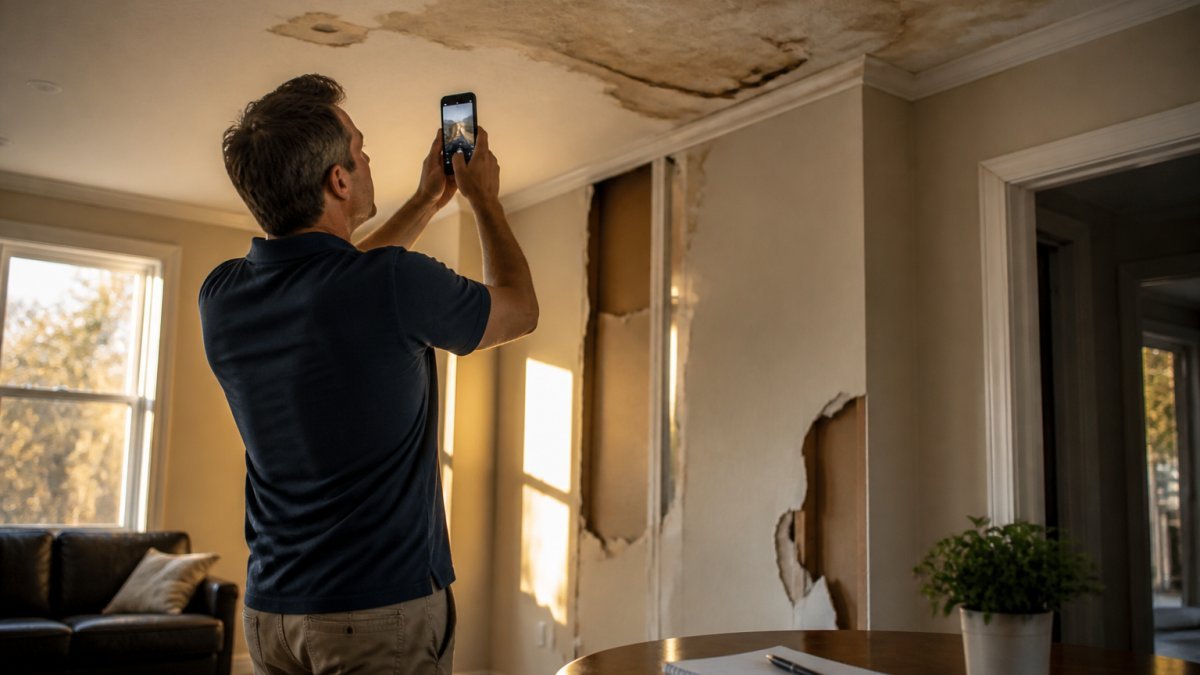
Save every receipt for emergency repairs, hotel stays, and meals if you’re displaced. Those costs may fall under additional living expenses in your policy (Ordered to evacuate due to Hurricane Laura? You might have insurance coverage for…).
What most guides miss: your photos should include a date stamp. Set your phone to show timestamps, or hold a newspaper in the first shot. It sounds old-school. It settles disputes.
Your Home Insurance Claim Documentation Checklist
A home insurance claim documentation checklist keeps you from missing the details that slow a claim down. Use this one as you go:
- Photos and video of every damaged area, wide and close-up
- A written list of damaged items with brand, age, and estimated value
- Receipts or bank statements for high-value purchases
- Your policy number and claim number
- Contractor repair estimates, at least two if possible
- Receipts for emergency repairs and temporary lodging
- Notes from every call with your insurer, including names and dates
- A copy of the police or fire report, if one applies
Your home inventory does most of the work here. If you never made one, rebuild it from memory, photos, and credit card statements. Start with the big items: furniture, electronics, appliances, jewelry.
Don’t throw away damaged property before the adjuster inspects it. Disposing of items too early can turn a covered loss into a disputed one, and you may lose the payout for those items entirely.
What to Say to an Insurance Adjuster
When you talk to an insurance adjuster, stick to facts and skip the guesses. Adjusters are trained to record what you say, and loose estimates can come back to haunt you. The goal of every conversation is to move the claim forward while protecting your documentation.
Here is what to say to an insurance adjuster, in plain terms:
- Describe what happened and when, using dates and times.
- Point to your documentation instead of estimating from memory.
- Say “I don’t know” when you don’t. Guessing helps no one.
- Ask what the next step is and when you will hear back.
- Request a written explanation for any decision you do not understand.
- Ask for a copy of the adjuster’s report and the line-item estimate.
Keep a notebook by the phone. Write down the adjuster’s name, the date, and what was discussed. If a second adjuster takes over, your notes become the record.
Reviewing the adjuster’s estimate, the step most homeowners skip. When the estimate arrives, treat it as a draft, not a verdict. Work through it line by line:
- Match quantities to your photos. Count rooms, square footage, and materials against what you documented. Undercounted areas are a common gap.
- Check for omitted scope. Look for missing line items like code upgrades, permits, debris removal, or matching materials for undamaged portions.
- Compare against a contractor bid. A contractor’s line-item estimate is your strongest tool for showing what the repair actually requires.
- Question depreciation. Ask how depreciation was calculated and whether recoverable depreciation is available once repairs are complete.
- Submit a written supplement. List each missing or undercounted item with supporting photos and your contractor’s estimate attached.
A supplement is simply a request to add items the original estimate missed. It is a normal part of the process, not an accusation. Hidden damage found during repairs, rotted framing behind drywall, for example, is a common reason to submit one.
Do not sign a contractor’s agreement that assigns your claim rights or authorizes them to negotiate with your insurer without reading it closely. You can hire help, but understand what you are signing before you do.
Most disputes come down to documentation or scope, not bad faith. Reconcile the adjuster’s estimate against your own evidence before you accept it, and your odds of a fair settlement improve.
The Home Insurance Claim Process and Timeline
The home insurance claim process and timeline usually follows the same path from loss to payment, but the details at each stage are where claims succeed or stall.
| Stage | What Happens | What You Do | Typical Timing |
|---|---|---|---|
| 1. Loss discovery | You find the damage and make the area safe | Stop the source, photograph everything, prevent further damage | Same day |
| 2. Report the loss | You call your insurer or agent and get a claim number | Confirm the claim number in writing; ask for the adjuster’s contact | Within days of discovery |
| 3. Documentation and mitigation | You gather evidence and make temporary repairs | Save every receipt; keep damaged items until inspected | Same week |
| 4. Adjuster inspection | The adjuster visits and assesses the damage | Walk the adjuster through your photos; point out every affected area | Often within a few weeks |
| 5. Estimate review | You receive the adjuster’s estimate | Compare line by line against contractor bids; flag missing items | After inspection |
| 6. Settlement offer | The insurer sends a payment or written decision | Review the scope and depreciation; ask for a written explanation of any gap | Varies by complexity |
| 7. Supplements and repairs | You hire contractors and complete the work | Submit supplement requests for hidden damage found during repairs | After payment |
While you wait: Report damage promptly. Delays give an insurer reason to question the claim. Make temporary repairs to prevent further damage, like tarping a roof or shutting off water, and keep those receipts.
When to follow up: A common pattern is to check in if you have not heard from the adjuster within a week of reporting, and again if the inspection has not been scheduled within two weeks. Put follow-ups in writing so you have a record.
The estimate-review step is where most money is left on the table. When the adjuster’s estimate arrives, do not accept it at face value. Compare it line by line against your contractor’s bid.
Keep a simple claim log: date, who you spoke with, what was decided, and the next promised step. When a second adjuster or a supervisor takes over, your log becomes the record that keeps the claim moving.
What to Do If a Homeowners Insurance Claim Is Denied
A claim denial isn’t always the final word. Read the denial letter closely and find the specific reason. Common ones include wear and tear, an excluded cause, or a missed deadline.
Next, request a written explanation of the decision. Then gather your evidence: photos, receipts, contractor estimates, and your policy language. Compare what the letter says to what your policy actually covers.
If you believe the decision is wrong, you can:
- Ask your agent to review the file with the insurer
- Submit a formal appeal with your documentation
- Request an independent review through your state’s insurance department
- Hire a public adjuster for complex or large claims
Many states have consumer protection rules and complaint processes for insurance disputes. Check your state insurance department’s website for the steps that apply where you live and for any filing deadlines.
Most denials come down to documentation or coverage language, not bad faith. Fix the gap in your evidence before you appeal, and your odds improve.
Avoid These Common Mistakes With Property Insurance Claims
The most common mistakes with property insurance claims are avoidable, and each one can cost you real money.
- Waiting too long to report. Delays raise questions about the cause and the timing.
- Skipping temporary repairs. Letting damage spread can reduce your payout.
- Guessing at values. Use receipts and records, not memory.
- Signing a contractor’s agreement to handle your claim. You can hire help, but read the fine print first.
- Throwing out damaged items before inspection.
- Filing tiny claims. Small claims can affect your premium and your claims history.
- Ignoring your policy exclusions. Flood damage, for example, usually needs separate coverage.
That last one matters. Standard homeowners policies often exclude flood, and flood coverage comes through a separate policy or the National Flood Insurance Program. Check your policy before storm season, not after.
If you’re unsure whether your coverage fits your risk, talk to an agent who can review your policy line by line. That’s what we do at SVF Insurance Agency: we are dedicated to guiding you through your options to ensure you are fully protected against life’s unexpected risks. Get a Quote
Frequently Asked Questions
What should I do first when filing a property insurance claim?
Make sure everyone is safe, then prevent further damage with temporary repairs like tarps or shut-off valves. Photograph and video the damage before anything is moved or repaired, and keep receipts for emergency materials. Report the loss to your insurer promptly and request a claim number. Review your policy coverage and deductible so you understand what is covered. Keep a written log of every call, email, and visit, including names and dates, because this record supports your property insurance claims file if questions come up later.
How long does a property insurance claim take from start to finish?
Timelines vary by damage type and insurer workload. Many homeowners insurance claims move from first notice to an adjuster inspection within one to two weeks, and a settlement decision often follows within 30 to 60 days. Complex claims involving contractor estimates, additional living expenses, or disputes can take several months. Your home insurance claim process and timeline should be confirmed in writing with your adjuster, and you can ask for status updates at each stage. Keep documenting everything so delays do not stall your claim.
Is it worth filing a homeowners insurance claim for small damage?
Compare your deductible to the repair cost and consider your claims history. If the damage is close to or below your deductible, paying out of pocket may protect your premium and eligibility. Filing many small claims can lead to premium increases or non-renewal. For sudden and accidental damage that clearly exceeds your deductible, filing usually makes sense. Review your policy coverage and exclusions first, and ask your agent how a claim could affect your specific policy before you file.
What not to say to a homeowners insurance adjuster?
Avoid guessing at causes, volunteering opinions about maintenance, or saying the damage is minor. Do not speculate about what you think happened or offer conclusions you cannot support. Stick to facts you observed, provide your documentation, and answer questions directly. If you are unsure, say you will check your records and follow up. Never exaggerate or minimize damage, and do not sign anything you do not understand. Clear, factual communication helps your property insurance claims move smoothly and reduces the risk of a claim denial.
Filing a claim is stressful enough without wondering whether your coverage fits. At SVF Insurance Agency, we help Florida homeowners review their policy, understand their deductibles, and file with confidence when the unexpected happens. Our agents shop multiple trusted carriers, explain your options in plain language, and stay reachable when you need a real person. Get a quote from SVF Insurance Agency today and make sure your home is protected before you need it.