

Table of Contents
- What to Do First After Home Damage
- Information to Gather Before Filing Your Claim
- How to Document and Inventory Damage: A Home Insurance Claim Documentation Checklist
- How to Contact Your Insurer and File Your Claim
- The Claims Adjuster Inspection and Damage Assessment
- How Long Does a Homeowners Insurance Claim Take to Process
- What to Do If Your Home Insurance Claim Is Denied
- The Florida Hurricane Insurance Claim Process
- Frequently Asked Questions
Last Updated: October 9, 2026
What to Do First After Home Damage
Your first actions after you file florida home insurance claim set the stage for success.
Contact your insurance agent or insurer as soon as possible. Most policies require prompt reporting, and filing quickly protects your coverage.
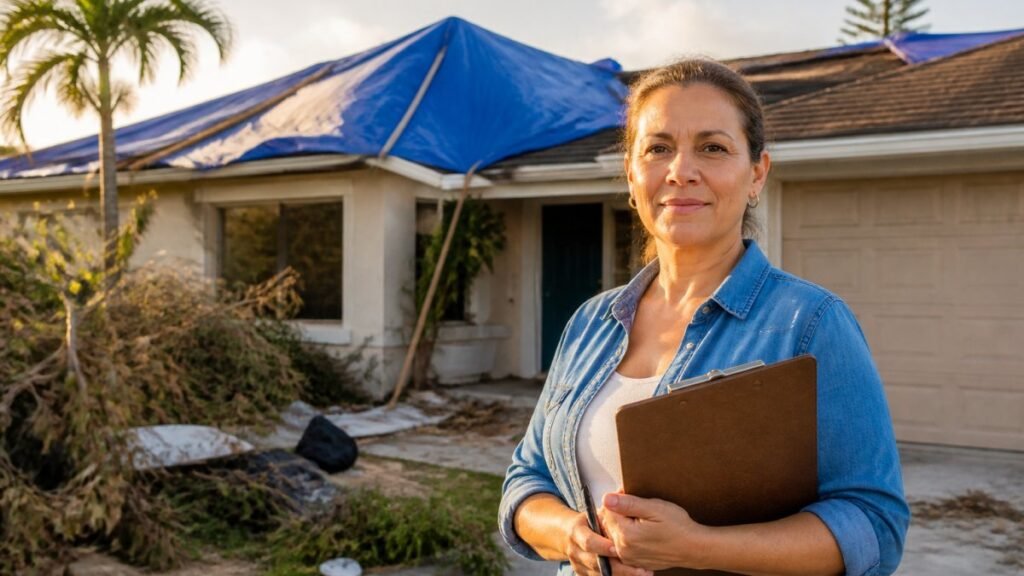
Prevent further damage, called mitigation, and your responsibility as the policyholder. Board up windows, tarp roofs, and shut off water if there’s a leak; failing to mitigate can reduce your payment.
Keep your insurance agent’s contact information saved in your phone. When disaster strikes, you won’t have time to search for it.
Information to Gather Before Filing Your Claim
Before you call your insurer, gather key information to speed up filing.
Collect these documents:
- Your insurance policy and policy number
- Your agent’s contact information
- Photos or videos of the damage
Know the date and time the damage occurred, since some policies exclude certain losses or have specific filing windows.
Understand your deductible to estimate your out-of-pocket cost.
Have a rough inventory ready, list major damaged items like appliances, furniture, and electronics. The adjuster will verify these during inspection.
How to Document and Inventory Damage: A Home Insurance Claim Documentation Checklist
Documentation is the backbone of a successful claim, so start photographing damage immediately.
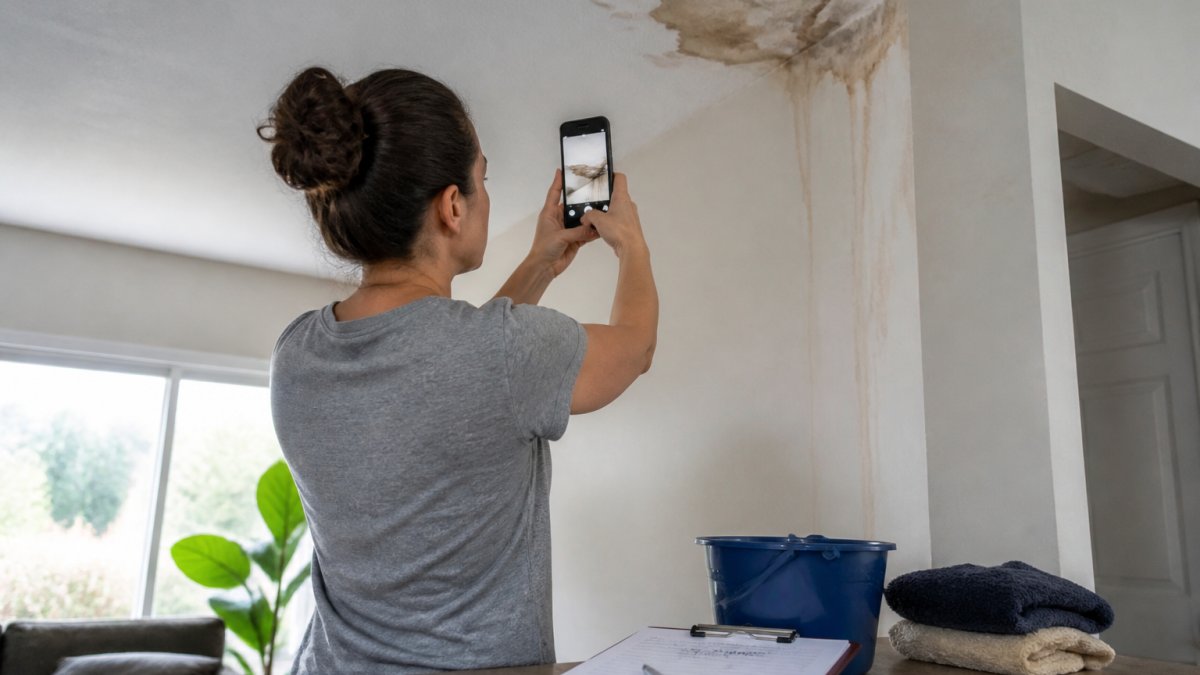
Use this checklist to document your loss:
- Take wide-angle photos showing overall damage to each room
- Capture close-up shots of specific damaged items
- Photograph serial numbers and brand names on appliances
Create a written inventory as you photograph, room by room, noting each item’s description, purchase date, price, and condition.
Store copies in multiple places, cloud storage, printed copies, and email, so you have backup records outside the property.
Many homeowners underestimate the value of their belongings. Take time to be thorough. Missing items from your inventory means missing payment for those items. The adjuster relies on your documentation to determine what you lost.
How to Contact Your Insurer and File Your Claim
To file florida home insurance claim, organize your information first, the process is straightforward.
Call your agent or the insurer’s claims line with your policy number and damage description ready.
File as soon as possible, early reporting establishes the timeline of loss, and some policies have filing time limits.
Keep copies of everything you submit and request written confirmation of your claim number and adjuster’s name.
Filing your claim promptly is one of the most important steps you can take. Delays give insurers reasons to question the validity of your loss or deny coverage. The faster you report, the faster the process moves.
The Claims Adjuster Inspection and Damage Assessment
After you file, an adjuster will inspect your property and estimate the damage.
The adjuster will schedule an inspection.
Clear pathways for the adjuster, have your documentation ready, walk through with them, and point out all damage.
The adjuster prepares a damage report, the basis for your payment.
The insurer then reviews the report, verifies coverage, and calculates payment, typically within 5-10 business days.
How Long Does a Homeowners Insurance Claim Take to Process
The timeline depends on the loss type, damage complexity, and how quickly you and your insurer exchange information. Simple claims resolve in days; complex ones can take weeks or months.
Here is a typical sequence for a straightforward property damage claim:
- Day 1: You report the loss and receive a claim number.
- Days 1-3: The insurer acknowledges the claim and assigns an adjuster.
- Days 3-10: The adjuster inspects the property and prepares a damage report.
That sequence is a general pattern, not a guarantee. Timing varies by insurer, claim volume, and the facts of your loss.
What the law requires
State law sets outer limits on claim handling. Under the Florida Insurance Code, an insurer must acknowledge receipt within a set number of days, begin investigation promptly, and pay or deny within a defined period after receiving proof of loss (Chapter 627 Section 70131 – 2024 Florida Statutes). Verify current rules with the Florida Department of Financial Services or your policy documents.
Two practical points matter more than the exact count:
- The clock often starts when the insurer receives proof of loss, not when you first call. If you delay submitting documentation, you delay the deadline.
- Requests for more information can pause the clock. Respond to every request in writing and keep a copy.
What slows a claim down
- Incomplete documentation. Missing receipts, photos, or inventory details force the adjuster to follow up.
- Coverage disputes. If the insurer believes the damage is excluded or pre-existing, it may investigate further.
- Widespread disasters. After a major storm, adjusters are stretched thin and inspections are scheduled farther out.
What you can do to speed things up
- Report the loss promptly and in writing when possible.
- Submit your inventory, photos, and receipts in one organized package.
- Respond to adjuster requests within a day or two.
Ask your adjuster for a realistic timeline when they first contact you. Some adjusters can give a specific estimate based on their current workload. That helps you plan for repairs, temporary housing, and any out-of-pocket costs.
If the claim is delayed beyond the periods required by law or your policy, request a written explanation and, if needed, escalate. The next section covers denials and underpayment.
What to Do If Your Home Insurance Claim Is Denied
A denial is frustrating, but not necessarily final. Understanding why your claim was denied is the first step to challenging it.
Request a written explanation from your insurer. The denial letter should state the specific reason. Common reasons include:
- The damage is not covered under your policy
- You failed to maintain the property
- The damage was caused by an excluded peril
Review your policy carefully. Compare the denial reason to your coverage details.
For significant claims, consider hiring a public adjuster who negotiates with the insurer and is paid a percentage of any additional payment recovered.
If the appeal is denied, file a free complaint with the state insurance commissioner, who investigates disputes and can force reconsideration.
The Florida Hurricane Insurance Claim Process
Hurricane claims follow the same basic path as other property damage claims, but Florida’s coverage rules, deductibles, and documentation expectations differ enough that a generic approach can cost you money.
Wind versus flood: two different policies
A common and costly misunderstanding is that a standard homeowners policy covers hurricane damage in full. In general:
- Wind damage, including damage from hurricane-force winds, wind-driven rain entering through a storm-created opening, and debris impact, is typically covered under a homeowners or dwelling policy, subject to your deductible and any exclusions.
- Flood damage, including storm surge, rising water, and overflow of a body of water, is generally excluded from a standard homeowners policy and must be covered by a separate flood insurance policy, often through the National Flood Insurance Program or a private flood insurer.
A single hurricane can cause both wind and flood damage, requiring two claims with two insurers. Document which damage was wind and which was water, since the claims are adjusted separately.
Flood insurance information and policy resources
Hurricane deductibles are different
Many Florida policies include a separate hurricane deductible that applies only to hurricane losses. It’s often a percentage of your home’s insured value, commonly 1% to 10%. A home insured for $400,000 with a 2% hurricane deductible would have an $8,000 out-of-pocket deductible.
Check your declarations page for:
- Whether a separate hurricane deductible applies
- The percentage or dollar amount
- The trigger, for example, whether it applies when a named storm is declared by the National Weather Service or another authority
Knowing this number before you file helps you decide whether a claim is worth filing.
Document before you clean up
After a hurricane, document before you clean up. Photograph and video every damaged area from multiple angles before moving or discarding anything, evidence captured in the first hours is often the strongest proof of your loss.
Use the documentation checklist in the earlier section, and add these hurricane-specific items:
- Photos of water lines on walls, furniture, and appliances
- Photos of roof damage, missing shingles, and debris impact points
- Video walkthroughs of each room, narrating what you see
Mitigation after a storm
Your policy generally requires reasonable steps to prevent further damage after a loss, including:
- Tarping or boarding damaged roofs and windows
- Removing standing water and drying out affected areas to prevent mold
- Removing fallen trees or limbs that are causing additional damage
Keep receipts for materials or services and photograph the work, these costs may be reimbursable if documented.
After a major storm, unsolicited contractors often appear in affected neighborhoods. Be cautious. Get multiple written estimates, verify licensing and insurance, and never pay in full upfront. Ask your insurer whether it has a preferred contractor network, and be wary of anyone who offers to handle your claim for you or asks you to sign over your rights.
Filing deadlines and prompt notice
Most policies require prompt notice of a loss, and Florida law sets additional deadlines for certain claims. Hurricane claims may have specific notice and proof-of-loss requirements, so confirm current rules with your insurer and the Florida Department of Financial Services rather than assuming a general “file within a year” rule applies.
If your hurricane claim is delayed or denied
If the insurer delays payment beyond the required period or denies the claim, request a written explanation and review it against your policy language, particularly the wind and flood provisions and the deductible. If you disagree, appeal in writing, request an inspection, or file a complaint with the Florida Department of Financial Services. For large or complex claims, consider a public adjuster or an insurance-dispute attorney.
Hurricane claims in Florida turn on three things: knowing whether your loss is wind or flood, understanding your hurricane deductible, and documenting the damage before you clean up. Get those right, and the rest of the process is far more manageable.
If you have questions about your coverage or need help filing a hurricane claim, contact SVF Insurance Agency. Our agents can review your policy, explain your deductibles and exclusions, and guide you through the claims process. Get a Quote
Frequently Asked Questions
What should I do immediately after discovering damage to my home?
First, ensure your safety and that of your family. If damage is severe or poses a safety risk, evacuate and call emergency services if needed. Once safe, document the damage with photos and videos from multiple angles. Contact your insurance company as soon as possible to report the loss. Take reasonable steps to prevent further damage, such as tarping a roof leak or boarding broken windows. Keep receipts for any emergency repairs or mitigation efforts. Avoid making permanent repairs until the claims adjuster has inspected the property.
What documents do I need to file a home insurance claim?
Gather your insurance policy documents, proof of loss (photos and videos of damage), an inventory of damaged property with replacement costs, receipts for emergency repairs or mitigation, and contact information for your insurer or agent. If applicable, include repair estimates from contractors, proof of ownership for damaged items, and any written correspondence with your insurance company. Having this documentation ready when you call to file your claim speeds up the process and strengthens your claim.
How long does a homeowners insurance claim take to process?
The timeline varies depending on claim complexity and damage extent. Simple claims may settle in 2-4 weeks, while more complex claims involving structural damage or multiple coverage types can take 6-12 weeks or longer. Your insurer must acknowledge receipt of your claim promptly. The adjuster will inspect the property, review your documentation, and issue a damage assessment. After settlement approval, payment typically arrives within 30 days. Delays may occur if additional investigation or repair estimates are needed. Your insurance agent or company can provide a specific timeline for your claim.
What happens if my home insurance claim is denied?
If your claim is denied, your insurer must provide a written explanation of the reason, typically citing policy exclusions or coverage limits. Review your policy carefully to understand the denial. Common reasons include damage from excluded perils (flood, earthquake, wear and tear) or failure to maintain the property. If you disagree with the denial, contact your insurer to discuss the decision. You can request a review of the claim, file a complaint with the Florida Department of Financial Services, or consult a public adjuster or attorney if you believe the denial is improper. Document all communications with your insurer.
Filing a home insurance claim doesn’t have to be overwhelming. With proper documentation, prompt action, and clear communication, you can navigate the process successfully. At SVF Insurance Agency, we help our clients understand their coverage and guide them through claims when they need us most. Our team is here to answer your questions and ensure you’re fully protected. Get a Quote today and discover how we can help you secure the coverage that matches your needs.