


Table of Contents
- Florida Homeowners Insurance Market Stabilization in 2026
- New Insurance Laws 2026: Legislative Reforms and Regulatory Oversight
- How to Lower Florida Homeowners Insurance Premiums
- Mitigation Discounts for Homeowners: Hurricane Mitigation and Risk Assessment
- Factors Influencing Premium Fluctuations and Insurance Market Outlook
- Claims Process Navigation and Coverage Limits
- Conclusion
- Frequently Asked Questions
Last Updated: September 30, 2026
Florida Homeowners Insurance Market Stabilization in 2026
Florida homeowners insurance market trends 2026 point to something the state hasn’t seen in years: a market that is finally catching its breath. After a brutal stretch of rate increases, carrier exits, and legal battles, the reinsurance market has softened and regulators have tightened the rules that once fueled runaway litigation. At SVF Insurance Agency, we’ve watched this shift play out, and the picture is genuinely more encouraging than it was two years ago.
That said, stabilization is not the same as relief. A flat renewal is not a reduction, and a reduction is not a guarantee it stays that way.
Average Premium Reductions by County
Average premium reductions vary sharply by county, and that variation tells you more about local risk than about statewide policy. Coastal counties with heavy wind exposure still carry the highest annual premium average, while inland counties have seen the most consistent downward movement on rate filings.
A common mistake is assuming a statewide average applies to your home. It doesn’t. Your premium reflects your roof age, construction type, distance to water, and claims history in your immediate area. Two houses on the same street can see very different renewals.
State-Backed Insurer Rate Adjustments and Market Capacity
State-backed insurer rate adjustments are reshaping where policies actually land. As private carriers return and expand their appetite, more homeowners are moving off the state-backed insurer and back into the private market, which relieves pressure on the residual market and improves overall market capacity.
The practical effect for you: it’s worth re-shopping your policy even if you renewed last year. Carriers that declined your home in 2024 may now write it.
New Insurance Laws 2026: Legislative Reforms and Regulatory Oversight
New insurance laws 2026 continue a multi-year push toward tighter regulatory oversight and fewer incentives for claims litigation. The core idea behind these legislative reforms is simple: reduce the legal costs baked into every premium, and carriers can price more competitively.
Impact of Statutory Changes on Policyholder Relief
Policyholder relief from statutory changes is real but indirect. You won’t see a check. You’ll see it in the form of smaller increases, or in some cases actual decreases, at renewal.
The honest limitation here is timing. Rate filings move slowly, and a law passed this year can take many months to show up in what you’re quoted.
When your renewal arrives, compare the rate filing date on your policy documents to the effective date of recent statutory changes. If your carrier filed before the reform took effect, your next renewal is the one to watch closely.
How to Lower Florida Homeowners Insurance Premiums
Learning how to lower Florida homeowners insurance premiums comes down to three levers: your deductible, your mitigation profile, and how many carriers actually see your application. Most homeowners pull only one of those levers and wonder why nothing changes.
Here’s what actually moves the number:
- Raise your deductible deliberately. Going from a low deductible to a higher one lowers your premium, but only if you can genuinely absorb that amount after a storm.
- Document your roof. A roof inspection report with remaining useful life can change how a carrier rates your home.
- Bundle home and auto. Multi-policy discounts remain one of the most reliable reductions available.
- Re-shop every year. Loyalty does not lower premiums in this market. Competition does.
That last point matters more than most people expect. Carriers adjust their appetite constantly, and a policy that was your best option last year may not be this year.
Wind-Only Policies and Coverage Gap Analysis
Wind-only policies exist because some coastal homes can’t get a standard HO-3 policy at a workable price. A wind-only policy covers hurricane and wind damage, but you still need separate coverage for fire, theft, and liability, usually through a different carrier.
This is where coverage gap analysis earns its keep.
If you carry a wind-only policy alongside a separate dwelling policy, confirm in writing which policy responds to water intrusion during a storm. Ambiguity here is the single most common reason a claim gets disputed.
| Coverage Approach | What It Covers | Best For | Watch Out For |
|---|---|---|---|
| Standard HO-3 policy | Wind, fire, theft, liability | Inland and newer coastal homes | Higher premiums near the coast |
| Wind-only policy | Hurricane and wind damage only | Coastal homes that can’t get HO-3 | Requires separate companion policy |
| Wind-only + dwelling policy | Wind plus fire, theft, liability | High-risk coastal properties | Two deductibles, two claims processes |
Mitigation Discounts for Homeowners: Hurricane Mitigation and Risk Assessment
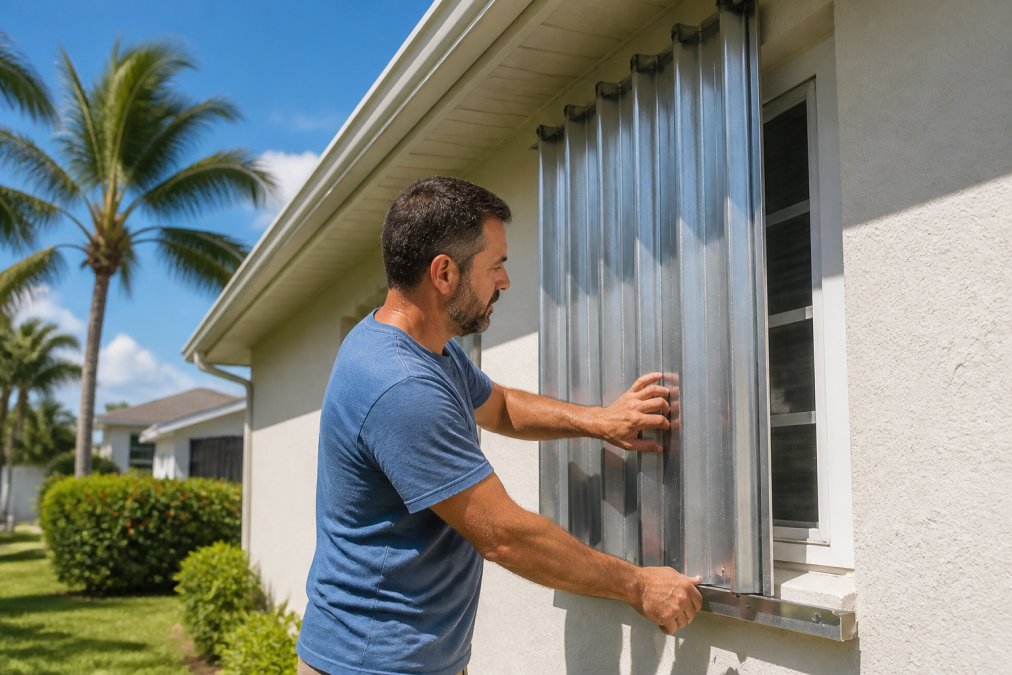
Mitigation discounts for homeowners are the most underused savings in the state. Carriers reward homes that are built and equipped to survive a storm, but they can only apply the discount if they know about your upgrades.
The upgrades that earn credits
A wind mitigation inspection scores your home on a defined set of features. Each one feeds directly into your premium:
- Roof covering. Impact-rated shingles, standing-seam metal, and tile generally rate better than standard three-tab shingles.
- Roof-to-wall connection. A secondary water barrier and a reinforced roof-to-wall attachment (straps or clips) are among the highest-value credits.
- Roof deck attachment. The method and fastener pattern used to attach the deck to the trusses is scored separately.
- Secondary water resistance. A sealed secondary barrier under the roof covering reduces interior water damage and is credited accordingly.
- Opening protection. Impact-rated windows, impact-rated doors, and approved shutters or panels are the single most impactful category for coastal homes.
- Roof shape and geometry. Hip roofs typically rate better than gable roofs because they shed wind more effectively.
What the inspections actually cover
Wind mitigation inspections and a current four-point inspection are the two documents that unlock most of these credits. A proper risk assessment looks at roof shape, roof covering, roof deck attachment, secondary water resistance, and opening protection. Each of those factors feeds directly into your premium.
How to sequence the work
If you are planning upgrades, sequence them by cost-to-credit ratio rather than by contractor convenience:
- Start with the inspection. You cannot claim a credit you cannot document. Get the report before you spend on upgrades so you know which features are already credited and which are missing.
- Prioritize opening protection. Impact windows and doors are a large upfront cost, but they are also the category most likely to change how a coastal home is rated.
- Address roof-to-wall and deck attachment during any re-roof. These credits are far cheaper to capture while the roof is already open than as a standalone project.
- Re-submit documentation after every upgrade. Carriers do not automatically re-rate your home. You have to send the new report.
Do not assume a contractor’s marketing claim equals a carrier credit. Confirm in writing which specific features your carrier credits and what proof it requires before you sign a contract.
The homeowners who lower their premiums fastest are the ones who document their home’s wind resistance and make sure their carrier has the current paperwork on file.
Factors Influencing Premium Fluctuations and Insurance Market Outlook
Premium volatility in this market is driven by four forces that rarely move in the same direction at once: reinsurance costs, catastrophic risk modeling, claims litigation trends, and underwriting standards. Reinsurance is the biggest single input, because carriers buy it before they ever price your policy.
Historical Context (2022-2025) and Loss Ratio Trends
The 2022 to 2025 stretch explains why everyone is so sensitive about premiums. Multiple carriers became insolvent or withdrew, policy counts shifted heavily toward the state-backed insurer, and loss ratios deteriorated as physical damage losses and litigation costs climbed together.
Claims Process Navigation and Coverage Limits
Navigating a claim is where a good policy and a bad one stop looking identical. The coverage limits on your declarations page determine what you actually collect, and the deductible structure determines what you pay first.
Before any storm, do these three things:
- Photograph and video every room, closet, and appliance.
- Store your policy number, carrier claims line, and agent contact somewhere off-site.
- Read your deductible clause and confirm whether it’s a flat amount or a percentage of dwelling coverage.
The cheapest policy is not the one with the lowest premium. It’s the one whose coverage limits and deductible you could actually live with after a storm.
Conclusion
The market is improving, but improvement is not the same as protection, and the homeowners who come out ahead are the ones who review their coverage before the season starts rather than after. That’s where SVF Insurance Agency does its best work: our specialists shop multiple trusted carriers to compare rates and coverage side by side, and we explain the gaps in plain language so nothing gets missed.
Frequently Asked Questions
Is homeowners insurance going up in Florida in 2026?
The market is stabilizing, and many insurers have filed for rate decreases or smaller increases for 2026. Average premium reductions vary by county, but state-backed insurer rate adjustments and legislative reforms are helping slow premium volatility. Factors like reinsurance costs and catastrophic risk still influence rates, so shopping multiple carriers remains important to find the best coverage for your home.
How do new insurance laws impact premiums in 2026?
New insurance laws 2026 focus on reducing claims litigation and strengthening regulatory oversight. These statutory changes aim to lower loss ratios for insurers, which can lead to more competitive pricing. Some policyholders may see premium reductions as insurers pass on savings from fewer lawsuits. An independent agent can explain how these reforms affect your specific policy and coverage limits.
What factors are driving current homeowners insurance trends?
Key drivers include market stabilization after recent legislative reforms, reinsurance costs, and catastrophic risk from hurricanes. Physical damage losses and claims litigation have historically pushed rates up, but improved underwriting standards and state-backed insurer adjustments are helping. Regional variations in insurance costs also depend on local risk assessment and market competition, so where you live in Florida matters.
How can I lower my Florida homeowners insurance premium?
You can lower your premium by taking advantage of mitigation discounts for homeowners, such as installing hurricane shutters, impact windows, or a reinforced roof. Raising your deductible or bundling auto and home policies may also reduce costs. Review your coverage limits to avoid paying for unnecessary add-ons. An independent agent can shop multiple carriers to find competitive rates for your specific home.