


Table of Contents
- Quick Comparison: Best Commercial Auto Insurance for Truckers
- How We Evaluated These Commercial Truck Insurance Companies
- 1. SVF Insurance Agency: Multi-Carrier Shopping for Florida Truckers
- 2. Progressive Commercial Truck Insurance: Broad Vehicle-Type Coverage
- 3. GEICO Commercial Truck Insurance: Customizable Coverage Options
- 4. Sentry Trucking Insurance: Built for Owner-Operators and Fleets
- 5. The Hartford and biBerk: Options for High-Risk and Commercial Auto Needs
- Commercial Truck Insurance Coverage: What Every Policy Should Include
- Frequently Asked Questions
Last Updated: October 7, 2026
Quick Comparison: Best Commercial Auto Insurance for Truckers
Finding the best commercial auto insurance for truckers comes down to matching a carrier’s appetite to your operation, not chasing the lowest headline rate. This guide from SVF Insurance Agency offers insights into commercial auto insurance options, highlighting what each does well and where each falls short.
Commercial auto insurance is a policy that covers liability and physical damage for vehicles used in a business, including semi trucks, dump trucks, and box trucks. For truckers, it is usually the single largest operating cost after fuel, which is why the choice deserves more than a five-minute quote form.
Below, we explain what coverage every policy should include and how to evaluate a quote.
Quick Picks:
- Best Overall: SVF Insurance Agency, multi-carrier shopping with a real agent on your side
- Best for Common Truck Types: Progressive, semi trucks and dump trucks both listed
- Best for Customized Coverage: GEICO, coverage built around your specific trucks
- Best for Owner-Operators: Sentry, liability, physical damage, cargo, and non-trucking coverage
| Carrier | Best For | Standout Feature | Pricing |
|---|---|---|---|
| SVF Insurance Agency | Multi-carrier comparison | Shops multiple trusted carriers for you | Quote-based |
| Progressive | Semi and dump trucks | Lists specific truck types covered | Quote-based |
| GEICO | Customized truck coverage | Customizable commercial truck policies | Quote-based |
| Sentry | Owner-operators and fleets | Liability, physical damage, cargo, non-trucking | Quote-based |
| The Hartford | High-risk trucking | Named for high-risk coverage | Quote-based |
| biBerk | Commercial auto policies | Commercial auto option for businesses | Quote-based |
How We Evaluated These Commercial Truck Insurance Companies
We judged each carrier on four things: which truck types it explicitly covers, how many trucking-specific coverage types it lists, whether it serves owner-operators as well as fleets, and how easy it is to get a real answer from a person.
The last point matters more than most guides admit. A policy is only as good as the coverage gap you did not notice until claim time, and gaps are exactly what a rushed online quote tends to hide.

The most expensive mistake in trucking insurance is buying on price alone. A cheaper policy that omits motor truck cargo or non-trucking liability can leave you paying out of pocket for a load you were hired to protect.
We also weighed transparency. Carriers that publish which truck types they cover, and which coverage types they offer, score higher than those that only say “get a quote.”
1. SVF Insurance Agency: Multi-Carrier Shopping for Florida Truckers
SVF Insurance Agency specializes in shopping multiple trusted carriers to bring you comparisons tailored to your needs.
That model solves the core problem with trucking insurance: no single carrier is competitive for every operation. A one-truck owner-operator hauling locally and a ten-truck fleet running interstate are different risks, and the carrier that wins on one rarely wins on the other.
Working with an agency means you get a real person who understands commercial truck insurance coverage. When something goes wrong with a policy, you can reach a real person for support.
What works: We handle commercial auto alongside the other coverage a trucking business tends to need, including business insurance and workers’ compensation, so your policies are coordinated rather than bought piecemeal from four different websites.
Where it falls short: If you want to buy a policy in ten minutes without speaking to anyone, a direct online carrier will feel faster. The tradeoff is that nobody reviews your coverage for gaps.
Trucking business owners who want their coverage compared across carriers and explained by a licensed agent before they commit.
2. Progressive Commercial Truck Insurance: Broad Vehicle-Type Coverage
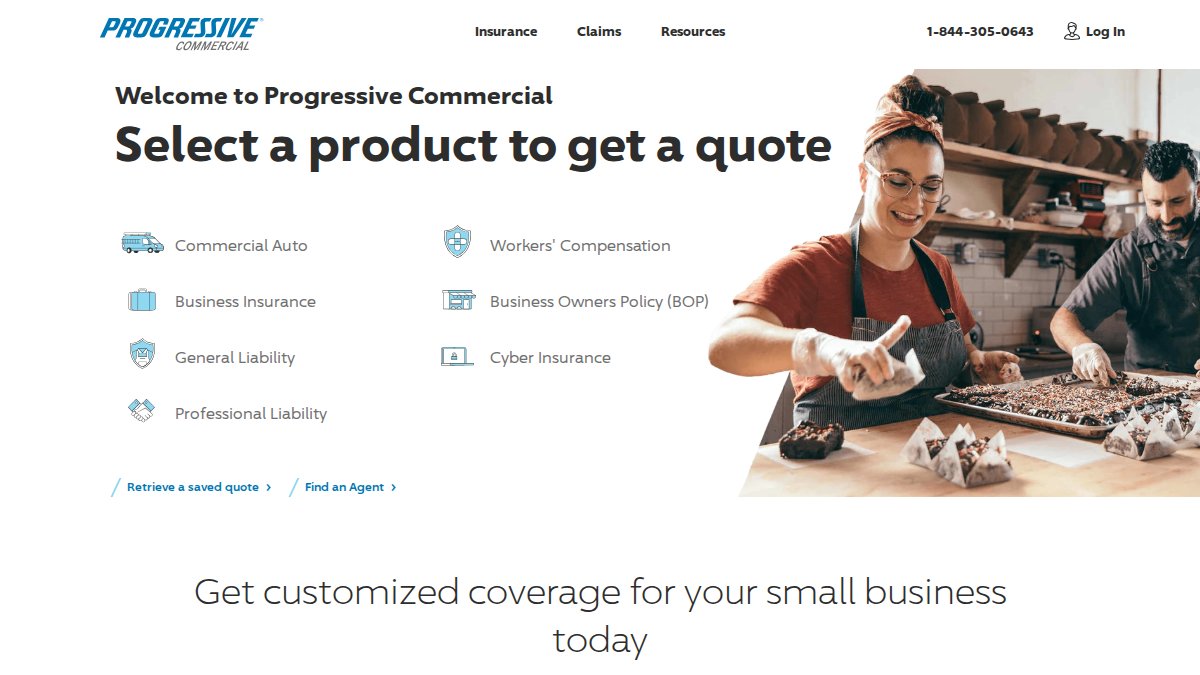
Progressive is the most direct answer for truckers who want to see rates quickly. Its commercial truck insurance page names semi trucks and dump trucks specifically, which matters because plenty of carriers quietly exclude one or the other.
The company also says customers can compare rates and coverages from multiple companies side by side, which is a useful starting point if you are still learning what a fair quote looks like.
What works: The listed vehicle types are broad, and the quote process is straightforward.
Where it falls short: The available information does not list policy prices or detailed coverage terms. You will need to work through a quote to see what is actually included.
3. GEICO Commercial Truck Insurance: Customizable Coverage Options
GEICO’s commercial truck offering is built around customization. Its page describes coverage designed to protect commercial trucks and presents the policy as adjustable to your operation.
For a small fleet with an unusual mix of vehicles, that flexibility is the appeal. A flat, one-size policy rarely fits a trucking business that runs both a heavy hauler and a service pickup.
What works: The product page is specifically about commercial trucks, and the coverage is described as customizable.
Where it falls short: The available information does not specify coverage limits, exclusions, or prices. Customization is only valuable if you know which options to select, which is where an agent earns their keep.

4. Sentry Trucking Insurance: Built for Owner-Operators and Fleets
Sentry lists the widest set of trucking-specific coverage types of any carrier here: commercial auto liability, physical damage, motor truck cargo, and non-trucking liability.
That last one is the detail worth pausing on. Non-trucking liability covers you when you are driving the truck for personal reasons, and drivers who skip it sometimes discover the gap only after an accident.
What works: The coverage lineup addresses liability, vehicle damage, cargo, and non-trucking needs in one place. Sentry also says its team has experience in the trucking insurance industry.
Where it falls short: The available information does not provide prices or detailed policy terms.

5. The Hartford and biBerk: Options for High-Risk and Commercial Auto Needs
These two carriers serve narrower needs. The Hartford appears in commercial truck insurance comparisons associated with high-risk coverage, which is relevant if you have had a claim denial, a lapse, or a violation on your record.
biBerk is named among top picks for commercial auto policies. It is worth a look if your operation uses commercial vehicles that are not strictly long-haul trucks.
What works: Both give truckers somewhere to look when a standard carrier declines the risk.
Where it falls short: For both, the available information does not verify specific policy features, eligibility, or pricing, and biBerk’s truck-specific availability needs confirming before you rely on it.
If a standard carrier declines you, do not assume you are uninsurable. High-risk markets exist for exactly this situation, and an agent who shops multiple carriers can usually place the risk somewhere.
Commercial Truck Insurance Coverage: What Every Policy Should Include
Every commercial trucking policy should include four core coverages: commercial auto liability, physical damage, motor truck cargo, and non-trucking liability. Missing any one of them creates a gap that shows up at the worst possible moment.
Use this checklist before you sign anything:
- Commercial auto liability, covers injury and property damage you cause to others
- Physical damage, repairs or replaces your truck after a collision, theft, or weather event
- Motor truck cargo, covers the freight you are hauling
- Non-trucking liability, covers personal use of the truck
- Correct coverage limits, confirm they meet your contracts and any state filing requirements
- Named drivers listed accurately, an unlisted driver can void a claim
- Exclusions reviewed in writing, ask what is not covered, not just what is
If you are comparing quotes and two look identical on price, the difference is almost always in the limits and exclusions. Read those before you decide.
When you are ready to see how your operation prices out across multiple carriers, get a quote from SVF Insurance Agency.
Frequently Asked Questions
Who has the best commercial auto insurance for truckers?
There is no single best provider for every trucker. The right choice depends on your truck type, cargo, radius, and risk profile. Progressive and GEICO offer direct quotes for common truck types such as semi trucks and dump trucks. Sentry lists liability, physical damage, motor truck cargo, and non-trucking liability coverage for trucking businesses. SVF Insurance Agency can help owner-operators and small fleets explore coverage options.
What insurance do truckers need for a commercial truck?
Most truckers need commercial auto liability, which covers injuries and property damage you cause to others. Physical damage coverage pays to repair or replace your truck after a collision, fire, or theft. Motor truck cargo insurance protects the freight you haul. Non-trucking liability applies when you use the truck for personal reasons. The exact combination depends on whether you run under your own authority or lease to a carrier.
Can owner-operators get commercial truck insurance?
Yes. Owner-operators can buy commercial trucking insurance, though underwriting is stricter than for large fleets. Sentry specifically lists coverage for owner-operators, and Progressive and GEICO both quote commercial truck policies. Expect insurers to review your driving record, years of experience, cargo type, and operating radius. Working with an agency that shops multiple carriers can help you find a policy when a single direct insurer declines your application.
How do I compare commercial trucking insurance companies?
Start by listing the coverage types you need: liability, physical damage, cargo, and non-trucking liability. Then compare each insurer on coverage limits, deductibles, exclusions, and whether they write your truck type and cargo class. Check the quote process, how claims are handled, and whether you reach a real person. An independent agency can present side-by-side options from several carriers so you compare like-for-like coverage, not just price.
What information do I need to get a commercial truck insurance quote?
Have your DOT number, MC number, and years in business ready. Insurers also ask for the truck’s year, make, model, and VIN, plus your CDL, driving record, and claims history. You will need to describe your cargo type, operating radius, annual mileage, and whether you run under your own authority or lease to a carrier. Gathering these details before you call speeds up the quote and helps you get accurate numbers.
Trucking insurance is one of those purchases where the cheapest quote and the right quote are often not the same policy. SVF Insurance Agency shops multiple trusted carriers, coordinates your commercial auto with your business insurance and workers’ compensation, and gives you a licensed agent who answers when a claim goes sideways. Get a quote and see what your coverage actually looks like before you sign.