


Table of Contents
- Full Coverage vs Liability Insurance in Florida: The Short Answer
- What Liability-Only Coverage Pays For (and What It Doesn’t)
- What ‘Full Coverage’ Actually Means in a Florida Policy
- Florida Auto Insurance Requirements: The Legal Minimum
- Comprehensive and Collision Insurance: The Part That Covers Your Car
- How a Car Insurance Deductible Changes the Math
- When to Drop Full Coverage (and When to Keep It)
- Frequently Asked Questions
Last Updated: October 20, 2026
Full Coverage vs Liability Insurance in Florida: The Short Answer
The difference between full coverage vs liability insurance comes down to whose damage gets paid for. Liability coverage pays for injuries and property damage you cause to other people; it never repairs your own car. “Full coverage” is not a legal product but a shorthand for liability plus comprehensive and collision coverage, which together also pay for damage to your vehicle.
At SVF Insurance Agency, we explain this distinction to new Florida drivers almost every week, and it is the single most misunderstood point on a policy. Florida requires liability coverage, but the state’s minimum limits are low, and they will not fix your own vehicle after a crash. Below, we walk through what each option actually pays for, how deductibles change the math, and when dropping full coverage makes sense.
Liability protects the other driver. Full coverage protects the other driver and your car. Only one of those keeps you on the road after an at-fault accident.
What Liability-Only Coverage Pays For (and What It Doesn’t)
Liability-only coverage pays for damage you cause to someone else, and nothing else. That means the other driver’s medical bills, their vehicle repair or replacement, and any property you damaged, up to your policy limits.
In Florida, liability splits into two parts:
- Bodily injury liability (BIL): pays for the other party’s injuries, including medical costs and legal defense if you are sued.
- Property damage liability (PDL): pays to repair or replace the other person’s vehicle or property.
What it does not do is just as important. Liability coverage will not pay a dollar toward your own car, your own injuries, or your own totaled vehicle. If you finance or lease your car, your lender will usually require physical damage coverage on top of liability, because the lender wants its collateral protected.
A common mistake is assuming a state-minimum policy is “enough.” It covers the other guy, and it stops there.
What ‘Full Coverage’ Actually Means in a Florida Policy
“Full coverage” is an informal term, not a policy type you can buy off a shelf. In practice, it means a policy that combines liability coverage with comprehensive and collision coverage, and often uninsured motorist protection. No Florida statute defines it, and no policy comes with that label printed on the declarations page.
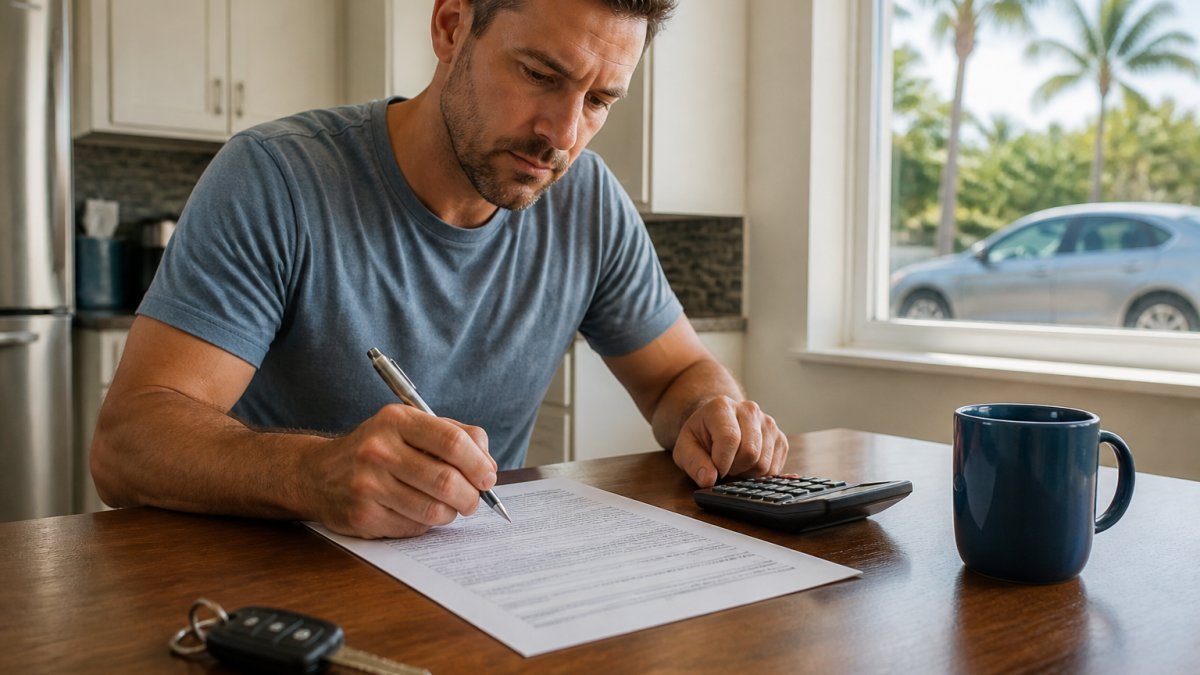
That matters when you shop. Two quotes labeled “full coverage” can differ wildly, because one agent may include uninsured motorist coverage and another may leave it out. Ask for the line-by-line breakdown, not the label.
Quotes that say “full coverage” without a coverage breakdown are a red flag. If uninsured motorist coverage or a specific deductible is not listed, assume it is not included until you see it in writing.
Florida Auto Insurance Requirements: The Legal Minimum
Florida auto insurance requirements center on two coverages: $10,000 in personal injury protection (PIP) and $10,000 in property damage liability (PDL). Florida is a no-fault state, which means your own PIP pays a portion of your medical bills and lost wages after a crash regardless of who caused it, and you do not need bodily injury liability to register a car in most cases.
Here is the catch that surprises new residents: the state minimum satisfies the law but leaves you exposed. A $10,000 PDL limit can be exhausted by a single newer vehicle, and Florida does not require BIL at the state minimum level. The Florida Department of Highway Safety and Motor Vehicles publishes the current requirements, and we recommend reviewing them before you set your limits.
The no-fault system changes who pays after a crash in ways that matter for your coverage choice. Your PIP pays first for your own medical bills and lost wages, up to the policy limit and subject to the state’s rules on which providers and treatments qualify. The other driver’s PIP pays for their own injuries, not yours.
Bodily injury liability is not required at the state minimum level, but it is commonly recommended and often required by lenders or lessors. If you cause a serious crash without BIL, the other driver’s insurer can come after your personal assets. A common pattern is that drivers carry the state minimum to register the car, then discover after an at-fault crash that the limits are far below the actual damage. The legal minimum is a floor, not a recommendation.
Even though Florida does not mandate bodily injury liability at the minimum level, we strongly recommend adding it. If you cause a serious crash without BIL, the other driver’s insurer can come after your personal assets.
Florida’s requirements also interact with the state’s high share of uninsured and underinsured drivers. Because BIL is not required at the minimum, a driver who causes a crash may have no bodily injury coverage at all. That is why uninsured and underinsured motorist coverage is worth pricing even though it is optional. It pays for your injuries when the at-fault driver has no insurance or too little to cover them.
The practical takeaway is to read the requirements as a starting point, not a finish line. Confirm the current minimums with the state, then decide whether your assets, your vehicle, and your passengers justify higher limits and optional coverages.
Comprehensive and Collision Insurance: The Part That Covers Your Car
Comprehensive and collision insurance is what turns a liability policy into what people call full coverage. Collision pays to repair or replace your vehicle after a crash with another car or object, regardless of fault. Comprehensive pays for non-collision damage: theft, fire, hail, flooding, vandalism, and hitting an animal (Auto Insurance Basics).
Both come with a deductible, the amount you pay out of pocket before the insurer pays the rest. A lower deductible means a higher premium, and the reverse is also true. Florida’s storm and flood exposure makes comprehensive coverage worth a hard look, since liability and collision alone will not pay for water damage after a hurricane.
If you are still paying off a car loan, check your lender requirements first. Most lenders require both coverages until the loan is satisfied.
How a Car Insurance Deductible Changes the Math
A car insurance deductible is the out-of-pocket amount you agree to pay on a claim before your insurer covers the remainder, and it is the lever that decides whether full coverage is worth the premium.
The math is not just about the premium. It is about the gap between what you can pay tomorrow and what the insurer will pay after the deductible. A common pattern is that drivers focus on the monthly premium and ignore the deductible until they file a claim, then discover the out-of-pocket amount is larger than their emergency savings.
Use this simple decision framework before you change anything:
| If your situation is… | Choose this deductible | Why |
|---|---|---|
| You have cash savings set aside | Higher deductible | Lower premium, and you can absorb the claim cost |
| You live paycheck to paycheck | Lower deductible | A surprise repair bill will not derail your budget |
| Your car is worth little | Higher deductible, or drop physical damage | The premium can approach the payout |
| Your car is new or financed | Lower deductible | Lender rules and replacement cost favor protection |
A practical rule: never set a deductible higher than the amount you could pay tomorrow without borrowing. If a $1,000 deductible would mean a credit card balance, it is too high for your situation.
Deductibles also interact with vehicle value and loan balance. If your car is worth a modest amount and you carry a higher deductible, the insurer’s payout after a total loss may be small relative to the premium you paid. That is the point at which dropping comprehensive and collision can make sense, provided you could replace the vehicle out of savings.
Florida’s storm and flood exposure adds another layer. Comprehensive coverage, which pays for non-collision damage such as hail, flooding, and vandalism, comes with its own deductible. A lower comprehensive deductible costs more in premium but reduces your out-of-pocket cost after a storm.
The decision framework is transparent: compare the annual premium for comprehensive and collision against what the vehicle is worth minus the deductible, then check whether you could replace the car out of savings. If the premium approaches the payout and you could absorb the loss, the coverage may not be worth it.
When to Drop Full Coverage (and When to Keep It)
Drop full coverage when the annual premium for comprehensive and collision approaches or exceeds what your vehicle is actually worth, minus the deductible. If your car is older, paid off, and worth a modest amount, you may be paying to insure a loss the insurer would barely cover.
Keep full coverage when any of these apply:
- Your car is financed or leased, because the lender requires it.
- You could not replace the vehicle out of savings if it were totaled.
- You live in an area with high theft or storm exposure.
- You rely on the car for work and cannot go without it.
One more coverage worth pricing before you decide: uninsured and underinsured motorist coverage. Florida has a high share of uninsured drivers, and UM/UIM pays when the at-fault driver has no insurance or too little to cover your injuries. It is often inexpensive relative to the protection it adds.
We would rather see you carry a slightly higher deductible and keep UM/UIM than save a few dollars by stripping the policy down.
Choosing between liability and full coverage is really a question about how much risk you can absorb on your own. If a totaled car or a serious at-fault crash would wreck your finances, the extra premium is buying real protection. SVF Insurance Agency shops multiple trusted carriers to compare auto insurance options side by side, explains each line of coverage in plain language, and stays reachable when you actually need to file a claim. Get a quote from SVF Insurance Agency and let our specialists build a policy around your car, your budget, and your risk.
Frequently Asked Questions
Does full coverage include liability insurance?
Yes. In Florida, a policy sold as full coverage starts with the state-required liability and personal injury protection, then adds comprehensive and collision for your own vehicle. Liability pays other people; comprehensive and collision pay to repair or replace your car. That is why full coverage costs more than liability-only, and why dropping to liability-only removes protection for your own vehicle entirely.
What happens if you total your car with only liability insurance in Florida?
You pay for the loss yourself. Liability-only coverage handles damage and injuries you cause to other people and their property, but nothing toward your own car. If the vehicle is financed or leased, the lender or lessor usually requires comprehensive and collision, so liability-only may not even be allowed on the policy. For an older car you own outright, that gap is the trade-off you accept for a lower premium.
Is full coverage required if you finance or lease a car in Florida?
Florida law does not require comprehensive and collision, but a lender or leasing company almost always does. They want the vehicle they hold an interest in protected, so the contract typically requires physical damage coverage, often with a cap on the car insurance deductible. Check your loan or lease paperwork before you strip coverage down. Removing it can put you in default even if the state has no objection.
When does liability-only insurance make sense?
Liability-only fits when the car is worth little, you own it outright, and you could replace it without a loan if it were totaled. If the annual cost of comprehensive and collision approaches a meaningful share of the vehicle’s value, the coverage is doing less work for you. Run the numbers against your savings before you decide, and keep in mind that Florida’s required personal injury protection stays on the policy either way.
How does a deductible affect a full coverage claim?
The car insurance deductible is what you pay out of pocket before comprehensive or collision coverage kicks in. A $1,000 deductible usually lowers your premium, but you need that $1,000 available the day you file a claim. A $500 deductible costs more monthly and less at the repair shop. Pick the deductible you can actually pay after an accident, not just the one that makes the quote look cheapest.