


Table of Contents
- Insurance Agency vs Online Direct: Quick Comparison
- How Direct-to-Consumer Platforms Work
- Independent Insurance Agent Benefits You Won’t Find Online
- Cost Comparison: Is Direct Always Cheaper?
- Insurance Claims Assistance: Where Agencies Win
- How to Choose an Insurance Agency That Fits Your Needs
- Frequently Asked Questions
Last Updated: September 23, 2026
Insurance Agency vs Online Direct: Quick Comparison
Choosing between a Florida insurance agency vs online direct carrier comes down to one trade-off: speed versus support. Direct platforms win on convenience and instant quotes. A local agency wins when you need coverage tailored to real risk, and someone in your corner when you file a claim. This guide from SVF Insurance Agency breaks down both paths, including the costs, the coverage gaps, and the claims support that rarely shows up in a quote comparison.
Here’s the short version before we go deeper:
| Factor | Online Direct | Local Insurance Agency |
|---|---|---|
| Quote speed | Minutes, self-service | Same day, guided |
| Carrier options | One carrier | Multiple carriers |
| Coverage customization | Standard templates | Tailored to your risk |
| Claims support | Call center | Dedicated agent advocacy |
| Best for | Simple, low-risk policies | Complex or high-value coverage |
How Direct-to-Consumer Platforms Work
A direct-to-consumer carrier sells policies straight to you, cutting the agent out of the transaction. You enter your details, get a quote, and bind coverage online, often within minutes.
Instant Quotes and Digital Policy Management
The appeal is obvious. Direct carriers built their entire model around speed. You can generate a quote, compare coverage tiers side by side, and manage your policy from an app. Digital ID cards, online payments, and self-service claims filing are standard features. For a renter or a single-car driver with a clean record, this is genuinely efficient.
What You Give Up Without a Local Agent
What you give up is the human layer. When something goes wrong, you’re working through a call center queue, not a person who knows your file. Direct platforms also sell one carrier’s products, so there’s no rate comparison happening on your behalf. According to the Florida Office of Insurance Regulation’s consumer resources, shoppers are encouraged to compare sample rates across carriers before committing, something a single-carrier platform can’t do for you.
The most common mistake with direct platforms is binding coverage without reading policy exclusions. A low premium often reflects narrower coverage limits or a higher deductible, not a better deal. You won’t discover the gap until you file a claim.
Independent Insurance Agent Benefits You Won’t Find Online
An independent insurance agent works for you, not for a single carrier. That distinction changes everything about how your coverage gets built.
Multi-Carrier Shopping and Coverage Customization
Independent agents hold appointments with multiple carriers, which means one conversation produces several quotes. That’s the core independent insurance agent benefit: rate comparison without you doing the legwork. More importantly, an agent can tailor coverage to your actual risk profile. A coastal home, a small trucking operation, a bundle of auto and home policies, each needs different handling than a generic online template allows.
The real difference between direct and agency isn’t price. It’s who owns the risk assessment. A direct platform fits your details into its product. An independent agent fits the product to your details.
Cost Comparison: Is Direct Always Cheaper?
No. Direct carriers often advertise lower premiums because they have removed the commission layer, but the sticker price is not the whole story. A cheaper premium with thinner coverage can cost far more at claim time, and the gap between the two models tends to widen the longer you hold the policy.
The Long-Term Cost of Ownership
Most comparisons stop at year one. The real difference shows up over five years, and it comes down to three forces: churn, renewal behavior, and coverage drift.
The most expensive policy is not the one with the highest premium. It is the one that denies a claim because a coverage gap was never explained at purchase. That cost rarely shows up in a quote comparison, but it shows up on the claim check.
A Framework for Comparing Real Cost
Instead of comparing premiums, compare these five numbers side by side for any two quotes:
- Annual premium, the headline number.
- Deductible, a higher deductible lowers premium but raises your out-of-pocket at claim time.
- Coverage limits, especially dwelling, contents, liability, and any sublimits on water, mold, or wind.
- Excluded perils, what the policy will not pay for, in writing.
- Renewal history, ask each carrier what its average renewal increase has been for policies like yours.
Ask any agent, direct or independent, one question before you buy: “What does this policy not cover?” The answer tells you more about value than the premium ever will.
Where Agencies Tend to Win on Cost
- Bundling across carriers. A single agency can place auto with one carrier and home with another if that combination prices better than any single-carrier bundle.
- Risk-profile matching. Certain carriers price coastal homes, older roofs, or commercial vehicles more aggressively than others. An agent knows which is which.
- Renewal re-shopping. Before each renewal, an agent can run your profile across the market and move you only if the savings justify the switch.
- Claims-time leverage. A well-advocated claim can recover more than the premium difference in a single event.
Direct platforms win on year-one price for simple, low-risk policies. Agencies tend to win on five-year total cost for households with any complexity, which, in this market, is most of them.
Insurance Claims Assistance: Where Agencies Win
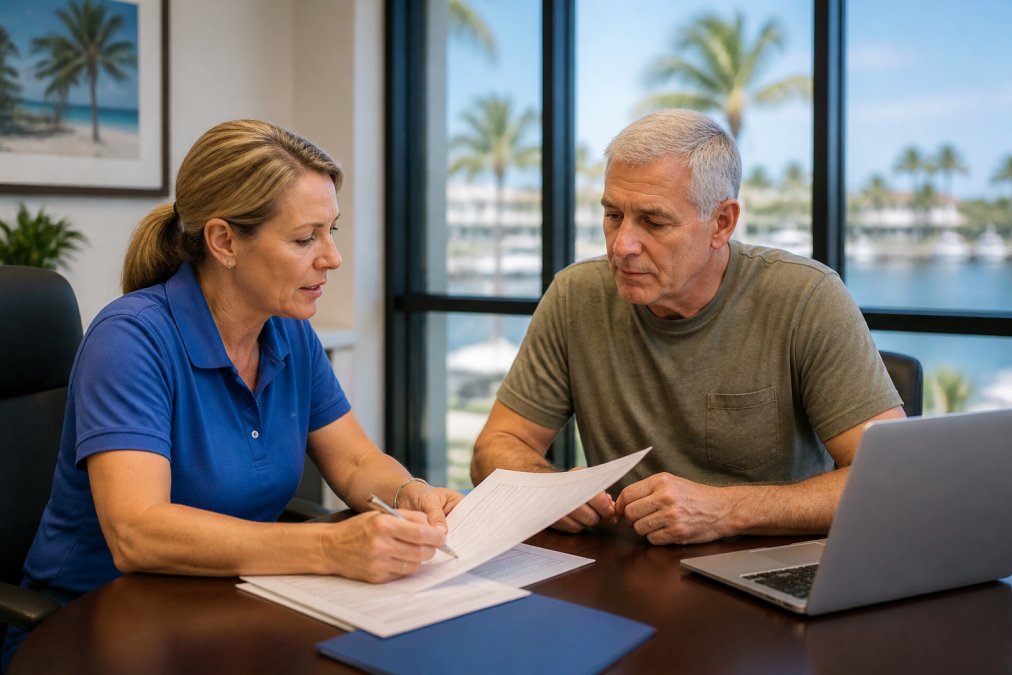
Claims assistance is the clearest dividing line between the two models, and it is also the part of the buying decision most shoppers underestimate. When you file a claim, a direct carrier assigns whoever is available in its queue. An agency assigns someone who already knows your policy, your risk, and the history behind how it was written.
What Actually Happens at First Notice of Loss
The difference shows up in the first 48 hours. Here is the typical sequence on each side:
| Step | Online Direct | Independent Agency |
|---|---|---|
| Report the claim | App or 800-number queue | Call, text, or email your agent directly |
| Who handles it | Rotating adjuster assigned by territory | Your agent, who already has your file |
| Documentation | You upload what the portal asks for | Agent helps assemble photos, receipts, inventories, and prior correspondence |
| Coverage questions | General call-center script | Agent reads your specific endorsements and exclusions |
| First offer review | You accept, negotiate, or hire help | Agent reviews the estimate against your policy before you respond |
| Escalation | Supervisor request through the queue | Agent escalates through underwriting and claims contacts they already work with |
Claims Advocacy in Practice
Claims advocacy is not a slogan. It is a set of specific actions an agent takes on your behalf:
- Reading the policy before the adjuster does. Most denials trace back to an exclusion or a limit the policyholder never noticed. An agent flags those before you file, so you can document around them.
- Translating the estimate. Adjuster estimates use line-item language that is easy to misread. An agent compares the estimate to your coverage and points out where scope was missed.
- Pushing back on a low first offer. A common pattern is a first offer that covers visible damage but omits matching materials, code-upgrade costs, or additional living expenses. An agent documents the gap and requests a re-inspection.
- Coordinating multiple policies. When a loss touches both auto and home, or both personal and commercial coverage, an agent manages the handoff between adjusters instead of leaving you to referee.
- Keeping a paper trail. Every call, email, and estimate gets logged. If the claim moves to appraisal or mediation, that record matters.
A direct carrier’s claims process is built to be efficient at scale. An agency’s claims process is built to be accountable to one policyholder at a time. Those are different products, and the difference only becomes visible when something goes wrong.
Where This Matters Most
Simple claims, a cracked windshield, a minor fender-bender with clear liability, usually resolve fine through a direct portal. The gap widens on:
- Disputed liability auto claims
- Water, mold, or storm-damage claims where cause of loss is contested
- Commercial losses involving business interruption
- Claims that touch multiple policies or multiple properties
- Any claim where the first offer feels low and you do not know why
How to Choose an Insurance Agency That Fits Your Needs
Use this checklist to evaluate any agency, including ours, before you commit:
- Does the agency represent multiple carriers, or just one?
- Will they review your coverage at each policy renewal?
- Can you reach a real person quickly when you have a claim?
- Do they explain policy exclusions before you sign?
- Are they licensed to write the coverage you actually need?
Frequently Asked Questions
Is it better to get car insurance through an agent or online?
It depends on how complex your coverage needs are. Online direct platforms work well for simple policies and fast binding. An independent insurance agent benefits you when you want rate comparison across multiple carriers, coverage customization, or help understanding state-specific requirements. Many drivers use online quotes for research, then work with an agency to finalize coverage and handle claims assistance if problems arise.
What are the benefits of using an independent insurance agency?
An independent insurance agent works with multiple carriers rather than one company. That means they can compare premium rates side by side, identify coverage gaps, and tailor policies to your situation. They also provide claims advocacy, help with policy renewal, and explain policy exclusions in plain language. For families and business owners with layered risk, that personalized advice often matters more than saving a few dollars upfront.
How does an insurance agency assist with claims compared to online direct?
When you file a claim through an online direct carrier, you typically interact with a call center or automated system. An agency assigns a licensed professional who knows your policy, communicates with the carrier on your behalf, and pushes back if a claim is undervalued. This insurance claims assistance can make a real difference when a denied or delayed claim threatens your financial protection.
What should I look for when choosing between an agency and a direct carrier?
Start by listing your coverage needs: auto, home, life, or commercial. Then compare how each option handles quote generation, policy management, and claims support. Ask whether the agency shops multiple carriers, how fast you can reach a real person, and whether they charge agency fees. A good agency will explain contractual obligations and coverage limits clearly before you commit, not after.
Does buying insurance online direct always save money?
Not always. Direct carriers often advertise lower base rates because they cut out the middleman, but those savings shrink when your situation requires coverage customization, bundled policies, or higher liability protection. An independent agency can sometimes find better premium rates by matching your risk profile to the right carrier. The long-term cost of ownership depends on how well your policy actually covers what matters.
The challenge with insurance is that the gaps only surface when you need coverage most. SVF Insurance Agency helps Florida individuals, families, and businesses avoid that trap by shopping multiple trusted carriers, customizing coverage to your real risk, and providing hands-on claims assistance when it counts. Get a quote from SVF Insurance Agency and secure coverage built around what matters most.